

A considered choice.
A better everyday.
A patio door links your living space to the outdoors. It should provide a useful view, an easy route to the yard and a layout that works with the room. Replacing a difficult or drafty door is an opportunity to reconsider how that opening serves the home.
GreenOn Homes helps homeowners compare patio door configurations, glazing and finishes as one project. Note how you use the opening through the year, including the furniture, deck layout and screen access around it.
Choose a configuration that fits daily movement
A sliding patio door moves along a track and does not need a swinging arc into the room or onto the deck. The active panel, fixed panel and clear passage width should be confirmed on the order, especially when the opening is used for large furniture.
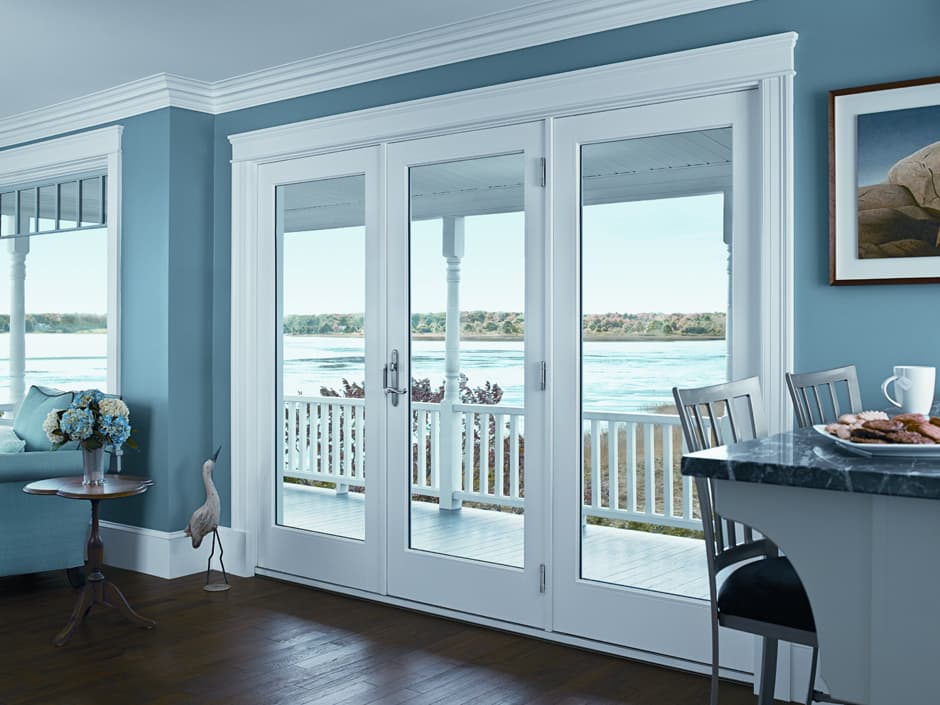
If you are considering a hinged garden-door arrangement, compare its swing clearance and how both leaves operate. The right layout depends on usable space on each side, not just the width of the wall opening.
Consider sunlight across a larger glazed area
Patio doors can bring substantial daylight into a room. Orientation, overhangs and existing shades affect whether that light feels comfortable. Discuss afternoon heat, glare and cold areas before choosing the glass package.
Compare ratings for the complete door assembly and confirm available double or triple glazing options. Privacy treatments, grille patterns and required safety glazing should be considered with the energy-performance specification, rather than added as an afterthought.
Pay attention to the threshold and surrounding water
The bottom of the opening is a critical part of the installation. Existing sill condition, exterior grade, deck height and drainage details should be assessed before a replacement is fitted. A new door should not simply cover an unresolved water problem.
Discuss the transition underfoot and any accessibility priorities early. Available threshold designs and installation conditions vary. Ask how the frame will meet interior flooring and exterior finishes and which repairs are included.
Specify the screen, hardware and care requirements
Handle position, locking options and the screen affect everyday use. Ask which components are included and whether optional hardware is compatible with the selected door. No door should be described as burglar-proof; evaluate the actual security features.
After installation, follow the product’s instructions for keeping tracks and drainage paths clear. If operation becomes difficult, have alignment and rollers assessed rather than forcing the panel. Keep the model and warranty information for future service.
Bring the details.
We’ll help with the decisions.
Visit us at 75 Fernstaff Ct #10 in Concord, or tell us about your project. We serve the GTA and selected Southern Ontario communities.
Plan your project- Confirm active panel and clear passage width.
- Review deck and furniture clearances.
- Compare complete-door glass ratings.
- Discuss sill condition and flooring transitions.
- Specify screen, handles and locking options.
Common questions
Which side of a sliding patio door should open?
Choose the active panel around the room layout, exterior route and screen access. Confirm the viewed-from-inside or outside convention on the supplier’s drawing to avoid a reversed order.
Can a patio door be installed in a larger opening?
Possibly, after assessment. Enlarging an opening can involve structural work, exterior repairs and interior finishing, so it needs a scope beyond a standard same-size replacement.
Why is my sliding door hard to move?
Debris, worn rollers, alignment or frame issues can contribute. An assessment helps determine whether service or replacement is appropriate; forcing a heavy panel can cause further damage.